
Wooded Parcels Cleared and Ready for Construction
Land clearing in Greenville for wooded lots where a building pad, driveway, and septic field need defined space before construction begins
Buyers purchasing wooded parcels in the Upstate to build on often discover that clearing is not simply removing everything on the lot—it is removing the right things in the right order so the building pad, driveway corridor, and septic field location are defined and protected before a single footing is poured. MACK Land & Tree Management LLC begins every land clearing job with the owner walking the parcel alongside the customer, marking what comes out, what stays, and where the planned improvements will sit. That walk determines the clearing sequence, not the equipment.
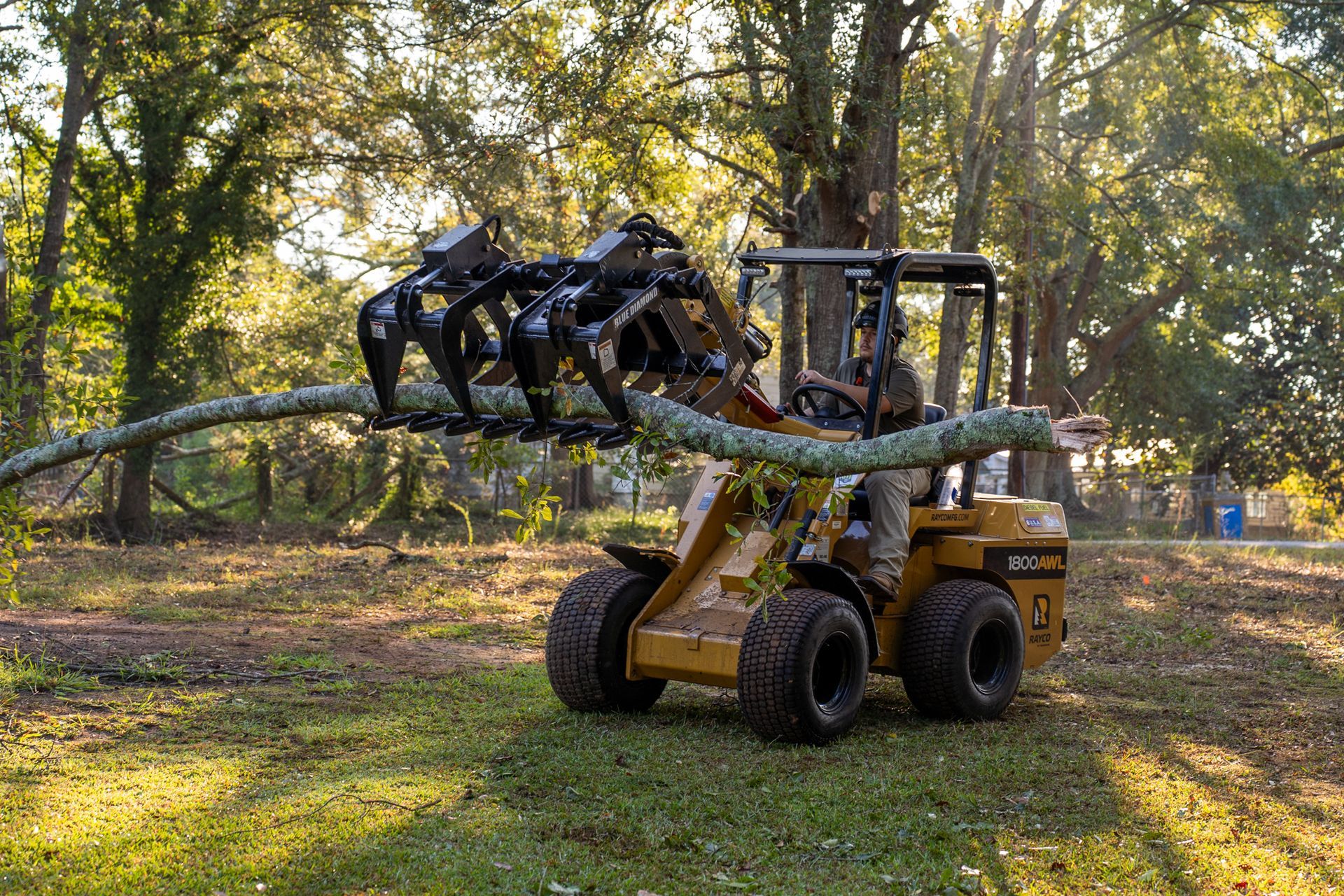
With the target areas marked, the crew works through the parcel in a planned order—brush and understory first to open sightlines and access, then trees within the footprint, with specimen trees and any vegetation the customer wants to retain protected during the work. Debris is removed or piled as agreed during the estimate walk, and the site is left clean rather than stacked with brush for the property owner or the builder to deal with separately. The result is a cleared site where the grading contractor or foundation crew can begin without navigating debris piles or unmarked retained vegetation.
Request a parcel walk to review the clearing scope and identify what stays, what comes out, and where the work begins.
How Clearing Is Planned Around the Build Footprint
The clearing sequence on a wooded homesite is shaped by three fixed elements: where the house sits, where the driveway enters the property, and where the septic system will be installed. Those three locations determine which trees can stay and which must come out, because a desirable tree that sits inside the septic field easement cannot be retained regardless of its size or condition. MACK Land & Tree Management LLC walks through those constraints with the customer during the estimate so the clearing plan is matched to the actual site plan rather than to a general preference for keeping large trees.
Once clearing is complete, what changes on the parcel is visible and immediate: the building envelope is open, the driveway corridor is accessible, and the boundary between cleared and retained vegetation is clean rather than ragged. Builders and grading contractors can set grade stakes and move equipment without working around brush or felled trees left in position.
Parcels in areas like Piedmont and Pickens, where buyers have been purchasing wooded acreage to build custom homes, often carry a mix of mature pines, hardwoods, and dense understory that requires both hand-clearing in areas near the retained specimen trees and mechanical clearing in the open footprint—the two methods used together prevent root damage to trees that are staying while handling the bulk of the clearing volume efficiently.
Questions Before Starting Your Project
The questions below address how land clearing decisions are made on wooded parcels and what the site looks like when the work is complete.
How does the crew determine which trees to protect during clearing?
Any tree within or immediately adjacent to the planned building pad, driveway corridor, or septic field location is evaluated during the estimate walk—retained trees are marked before equipment moves onto the site, and clearing operations keep equipment outside the drip line of those trees to avoid compacting the root zone, which can kill a tree within two to three years even if the trunk is never touched.
What order does the clearing work follow once the crew begins?
Understory brush and smaller vegetation come out first to open access and allow the crew to see the full canopy structure of the larger trees; trees within the cleared footprint are then addressed in a sequence that works from the building pad outward so debris falls into already-cleared ground rather than onto retained vegetation.
How is debris handled on a wooded parcel that is being cleared for construction?
The debris handling method—hauled off-site, chipped and spread, or pushed and piled at a designated location—is agreed on during the estimate walk and affects how the site looks when the crew leaves; builders typically need a clean pad without piles, which means haul-off or on-site chipping rather than pushing material to the lot edge.
Why does clearing sequence matter for a lot that has both the building footprint and a driveway corridor to clear?
The driveway corridor is often the access route for clearing equipment, so that path needs to be opened and stable enough to handle equipment weight before the crew addresses the building pad—clearing the pad first and leaving the driveway obstructed means equipment cannot exit without damaging what was just cleared.
What should a cleared homesite look like before a grading contractor arrives?
The surface should be free of standing brush, felled trunks, and loose debris within the footprint, with stumps either ground to below grade or clearly marked if stump grinding is a separate phase—a grading contractor cannot set accurate elevations or run equipment safely over a site with unground stumps hidden beneath loose topsoil.
MACK Land & Tree Management LLC also
clears land in Taylors, Greer, Simpsonville, Easley, and Spartanburg. Call (864) 982-8249 to walk your parcel with the owner and develop a clearing plan that fits your build timeline and site requirements.