
Building Pads and Driveways Graded to Hold Their Shape
Grading in Greenville for sloped and uneven parcels where a stable, compacted surface is required before construction or use begins
Upstate parcels are rarely flat. Many of the wooded and semi-rural lots being developed in areas like Travelers Rest and Powdersville carry natural slopes and low points that make construction impractical without cutting and filling the ground first. MACK Land & Tree Management LLC handles grading work on those properties, starting with a walk through to establish target elevations before any dirt is moved—because a surface graded without confirmed elevations may need to be reworked after the building pad or driveway is staked by the engineer or contractor who arrives next.
After the walk through, the crew sets grade stakes or confirms the target elevations from a site plan, then cuts high spots and moves that material to fill low areas in layers that are compacted as the work progresses rather than at the end. Compacting in lifts—typically six to eight inches of loose material at a time—produces a surface that does not settle unevenly after the first rain or under the weight of equipment. Final grades are checked with the owner before the site is handed over, so any adjustments are made while the crew and equipment are still on site.
Arrange a site walk to review the existing elevations on your parcel and identify what grading work is needed before your next construction phase.
Why Grading Is Done in Layers, Not All at Once
A graded surface that is not compacted in lifts will settle—sometimes significantly—once the fill material is exposed to moisture and load. On a driveway or building pad, that settlement shows up as ruts, low spots that collect standing water, or a surface that shifts under vehicle weight after the first few uses. The lift-and-compact method requires more passes with compaction equipment but produces a measurably more stable result: the surface holds its shape because each layer has been densified before the next is added, and the final grade is supported by compacted material throughout its depth rather than loose fill that has only been shaped at the surface.
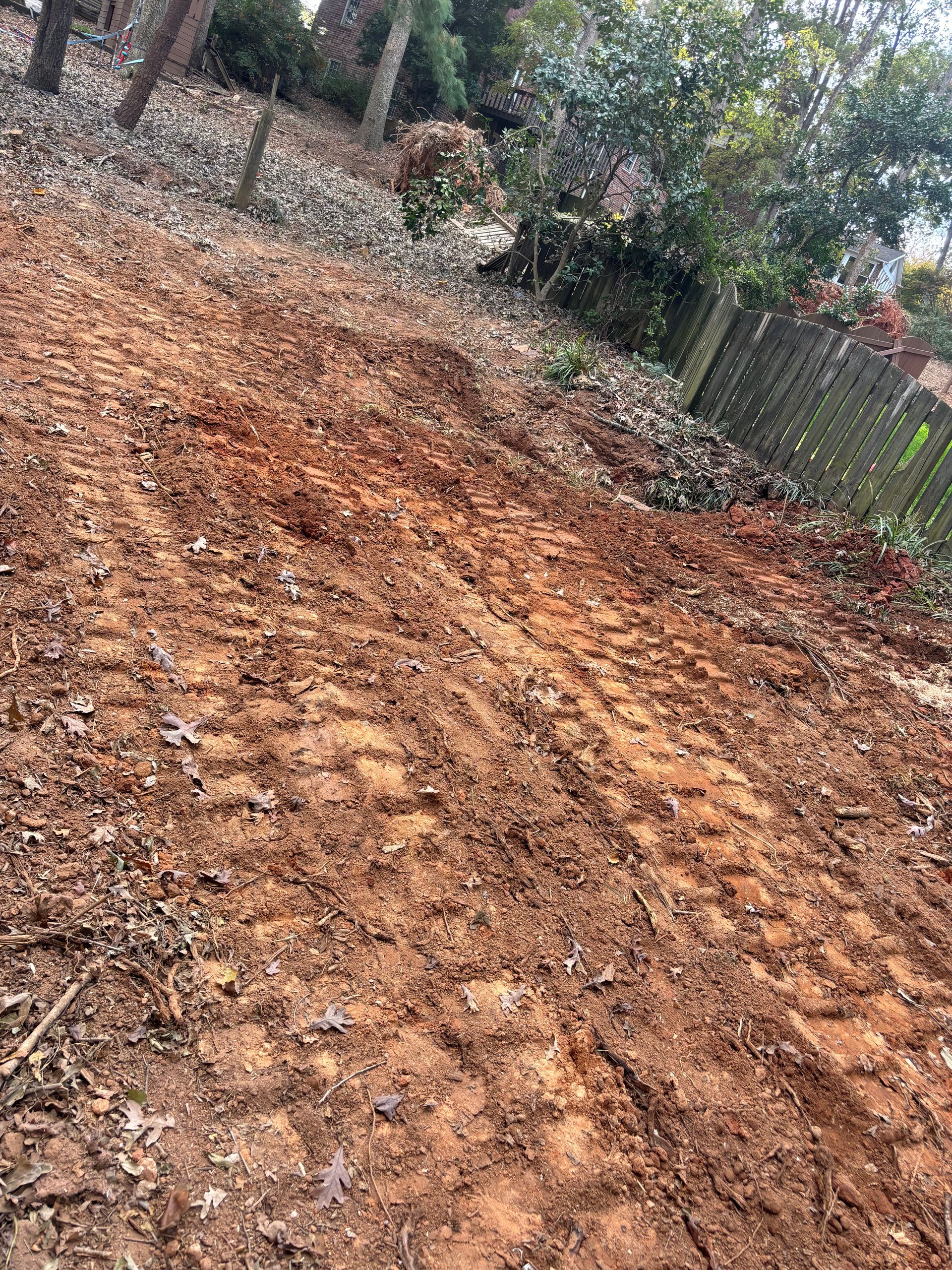
When grading is complete and the final elevations are confirmed, what you see on the site is a surface that drains in the intended direction, sits at the correct height relative to the building footprint or driveway connection point, and does not have visible high spots or depressions. MACK Land & Tree Management LLC walks that final grade with the property owner before the crew leaves so both parties can confirm the elevations match what was planned.
Grading scope is shaped by what comes next: a building pad requires a tighter tolerance than a parking area or rough driveway, and a site where the foundation contractor will be setting forms needs to match elevations precisely enough that the concrete pour is not compromised. Those tolerances are discussed during the walk through so the crew understands what standard the graded surface needs to meet when they leave.
What Property Owners Ask About the Work
The questions below address how grading decisions are made, how the crew establishes elevations, and what a properly graded surface looks like when the work is finished.
How does the crew establish the correct grade before moving dirt?
Grade stakes are set to the target elevation from a site plan or from the agreed-upon drainage direction; on building pads, the elevation is typically dictated by the foundation contractor's requirements, and the grading crew confirms that figure during the walk through rather than estimating it from the existing terrain.
What does compacting in lifts mean and why does it matter for a driveway or pad?
Compacting in lifts means adding fill material in layers—typically six to eight inches of loose material at a time—and running compaction equipment over each layer before adding the next; a pad built this way supports load at every depth rather than only at the surface, which is what prevents the settling and rutting that appear months later on fills that were only surface-compacted.
How does the slope of a Greenville-area parcel affect how much cut and fill is required?
Steeper parcels require more material to be cut from the high end and moved to the low end to create a level building pad, and on lots where the natural grade drops significantly across the footprint, the fill side of the pad may need to be built up several feet—which increases compaction requirements because a deeper fill column has more opportunity to settle if each layer is not properly densified.
What is the crew checking when they walk the final grade with the owner?
The final walk confirms that the surface drains toward the intended outlet rather than toward the building footprint, that the elevation at the connection points—where the driveway meets the road or where the pad transitions to the foundation wall—matches the planned dimensions, and that no depressions have appeared in the compacted surface from equipment movement after the final pass.
Why does the intended use of the graded surface affect how the work is done?
A rough driveway that will carry light vehicles has a wider acceptable tolerance than a building pad where concrete will be poured; knowing the next step in the construction sequence tells the crew what grade accuracy is required and whether the surface needs to be fine-graded by hand in areas where equipment cannot operate without disturbing what was already compacted.
MACK Land & Tree Management LLC also performs
grading in Simpsonville, Greer, Taylors, Easley, and Spartanburg. Call (864) 982-8249 to walk your property with the owner and confirm what grading work is required before your build or improvement project moves forward.