Fallen Trees Cleared When Access or Safety Is at Risk
Emergency tree service in Greenville for trees down on roofs, driveways, and structures that cannot wait for a scheduled appointment
A large pine across a driveway or an oak limb through a roof section is not a job that waits for a Monday morning callback. MACK Land & Tree Management LLC takes emergency tree calls directly and dispatches the owner's crew to properties in Greenville where a fallen tree is blocking access, resting on a structure, or threatening to shift further and cause additional damage. The crew operates on request around the clock, and the call goes to a person—not a voicemail queue.
When you call, describe what is down, where it landed, and whether it is touching a structure or a utility line. That information determines how the crew approaches the scene: if the tree is resting on a roof, the first priority is stabilizing and clearing the sections in contact with the structure before moving to the trunk and root ball. If a driveway or access road is blocked, that section is cut and moved first so emergency vehicles or residents can pass. The crew assesses tree stability before any cuts are made, because a loaded tree resting at an angle behaves differently than one lying flat, and the cut sequence has to account for how the wood will move when tension is released.
Call (864) 982-8249 directly to describe the situation and get a crew dispatched to your property.
What Proper Emergency Tree Response Requires
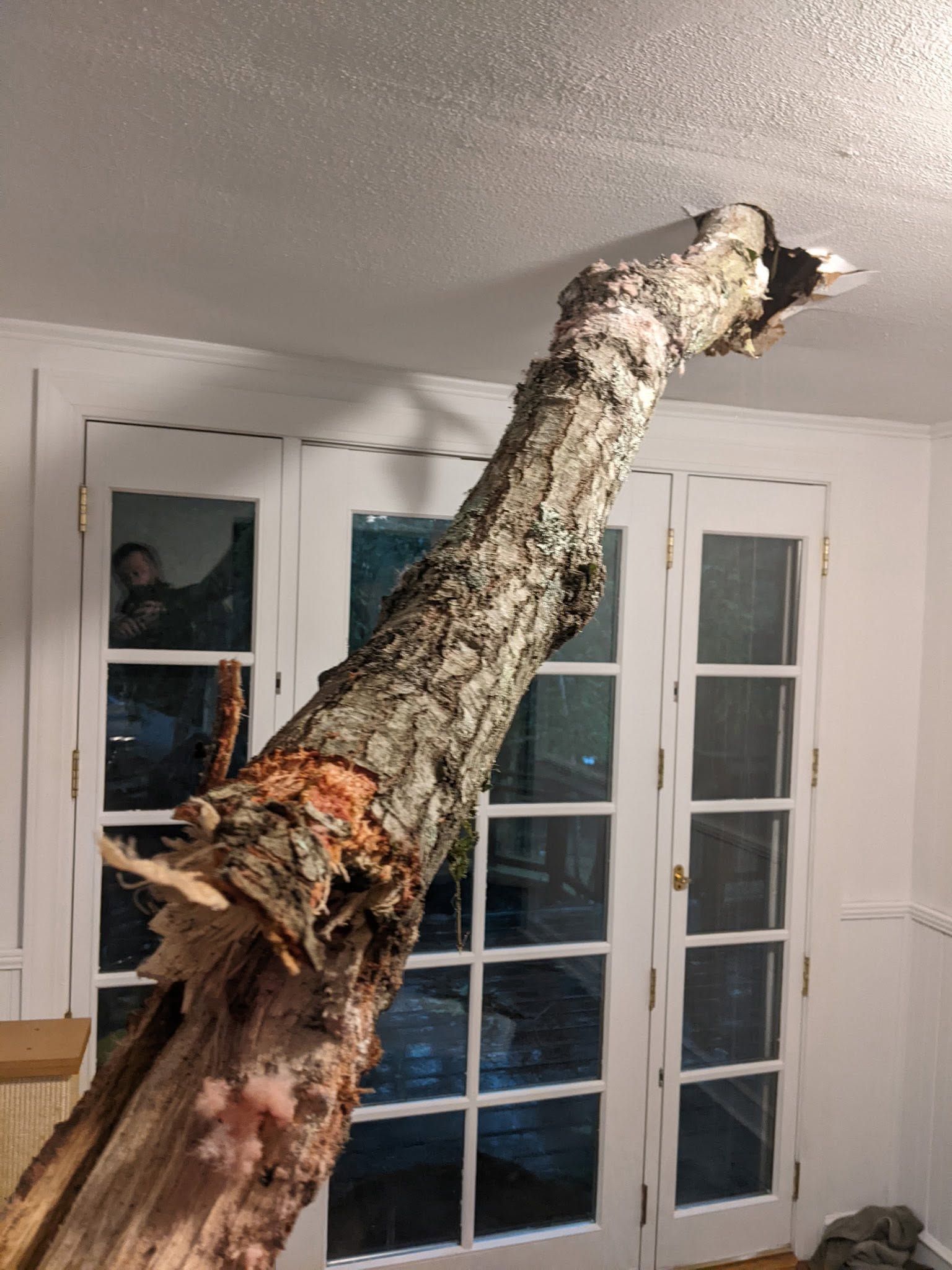
Emergency removals differ from scheduled jobs in one critical way: the tree's position and load have already been decided by how it fell, and the crew works around those conditions rather than setting them up in advance. A tree that has partially entered a roof deck creates a pinch point—the wood is under compression where it contacts the structure and under tension on the opposite side, and cutting in the wrong location releases that energy in an unpredictable direction. Crews with experience in Upstate conditions, where large hardwoods like water oaks and red oaks routinely fall across older residential structures, recognize those load patterns before making the first cut.
Once the hazard sections are cleared, you notice two things: access is restored or the structural threat is removed, and the remaining debris—trunk, limbs, and root ball where applicable—is staged or hauled before the crew leaves. MACK Land & Tree Management LLC does not leave a cleared path with a pile of logs at the edge of the yard; debris removal is part of the emergency response, not an add-on scheduled for later.
Licensed and insured status matters specifically in emergency situations because any further damage to a structure that occurs during removal falls under the crew's coverage, not the property owner's. That is a consideration worth confirming before any crew begins cutting on a tree that is already in contact with your roof or siding.
Answers About How Emergency Tree Work Is Done
The questions below address how the crew handles an emergency call from first contact through site clearance, including decisions made when a tree is already in contact with a structure.
What should you tell the crew when you call about a fallen tree?
Describe what species or size the tree is if you know it, where it landed—roof, driveway, fence, or open yard—and whether it is touching a utility line, because that last detail determines whether the power company needs to disconnect service before the crew can begin cutting safely.
How does the crew decide which section of a fallen tree to cut first?
The first cut priority is whichever section is blocking emergency vehicle access or actively loading a structure; relieving that pressure or clearing that path comes before addressing the rest of the trunk, because leaving a loaded section in place while cutting elsewhere can cause the tree to shift unpredictably.
Why does tree stability matter before any cuts are made?
A tree resting on a roof or railing is held in position by contact points that act as fulcrums; cutting the trunk on the wrong side of that contact point can cause the remaining wood to pivot and increase damage rather than reduce it, so the crew reads the lean and load direction first.
What happens with the debris after an emergency removal?
All limbs, trunk sections, and wood chips are hauled away as part of the job; the site is not left staged for a follow-up pickup, which matters when the fallen tree is across a driveway or against a building where debris cannot simply sit.
How does working in Greenville affect how emergency calls are handled for properties with large hardwoods near older homes?
Established residential lots in Greenville often carry water oaks and red oaks with canopies that have grown over rooflines for decades, and those species are heavy and dense when they fall—the crew accounts for that weight when positioning equipment and planning cut sequences near older construction where roof framing may already be under load from the tree's contact.
MACK Land & Tree Management LLC also handles
emergency tree service in Greer, Simpsonville, Taylors, Easley, and Spartanburg. If a tree is down on your property right now, call (864) 982-8249 and describe the situation so the crew can respond with the right equipment.