
Built Ground Up, Drains Right
Driveway installation in Greenville for newly cleared lots and rural homesites where the ground needs to be properly built up before surfacing
A driveway cut across raw, recently cleared ground is not simply a surface problem — it is a foundation problem. The cleared route has to be graded to direct water away from the travel lane, and the base beneath the surface has to be built in compacted layers that will not shift or sink under vehicle loads over time. MACK Land & Tree Management LLC handles driveway installation in Greenville with that sequence as the starting point, working from the subgrade up before any surface material is placed. Properties in the outlying areas where new homesites are being carved out of wooded land — including the rural corridors outside the city where construction on larger lots is active — are the exact conditions this process is built for.
The installation sequence begins with clearing any remaining debris from the route, then grading the corridor so the finished surface crowns or slopes in a way that sheds water to the side rather than holding it in the wheel paths. Base stone is then placed and compacted in lifts — meaning in layers — rather than dumped all at once, because compacting in stages is what creates a stable base that resists rutting and settling. When you speak with the crew, they confirm what the final surface will be, whether gravel or another material, and clarify exactly what is included in the scope so there are no gaps between what was quoted and what gets built.
Arrange a site visit with MACK Land & Tree Management LLC to review the route, grade conditions, and surface options for your specific property.
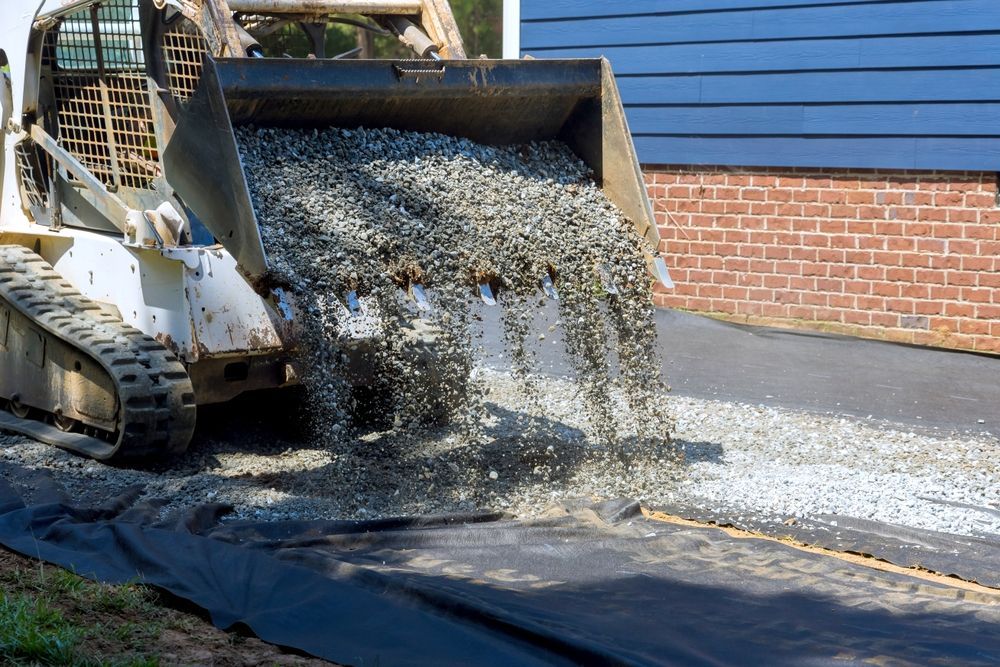
How Driveway Base Construction Determines Long-Term Performance
The visible surface of a driveway is the last step, not the most important one. What determines whether a driveway remains usable after several years of vehicle traffic and wet conditions is the depth and compaction of the base beneath it. Stone base placed in compacted lifts creates an interlocking structure that distributes load across a wide area rather than concentrating pressure on soft subgrade material. On newly cleared rural lots — where the topsoil has often been disturbed and the subgrade may include clay layers that soften significantly when wet — skipping or shortcutting the base-building phase leads to visible rutting and soft spots within one to two seasons of use.
Once a driveway is properly graded and the base is compacted, the completed surface drains predictably after rain rather than collecting water in low points along the route. Vehicle movement stops tearing up the surface, the edges hold their shape without sloughing into the adjacent ground, and the driveway functions as a stable access route rather than a muddy track that deteriorates with use. MACK Land & Tree Management LLC builds the base to the standard that produces that kind of longevity rather than treating it as a step to rush past.
Licensed and insured, with over 120 five-star Google reviews behind the work, MACK Land & Tree Management LLC approaches each installation with the drainage plan and compaction requirements specific to that lot — because two driveways on adjoining properties can have meaningfully different base requirements depending on grade, length, and existing soil conditions.
What Property Owners Ask About Driveway Work
The questions below focus on the construction process itself — what happens on site, how decisions are made, and what finished work actually looks like on a rural or newly cleared lot.
Why does the base need to be compacted in layers rather than all at once?
Compacting stone in lifts allows each layer to achieve full density before the next is added. Dumping the full depth at once means the bottom of the pile is never properly compacted, which leaves a loose layer that eventually shifts under load and causes the surface to sink or rut.
How is the grading determined before base stone is placed?
The grade is set by evaluating the natural slope of the corridor and identifying where water will flow when the surface is finished. The goal is a crown or cross-slope that consistently moves water off the travel lane and away from any structures at the end of the driveway.
What does proper drainage look like once the driveway is finished?
After a rain event, water should sheet off the surface and collect in the drainage swales or shoulders alongside the drive rather than pooling in wheel tracks or low points. Standing water on a finished gravel surface is a reliable sign that the grade was not set correctly during installation.
How do newly cleared lots in Greenville's rural corridors affect how the base is built?
Lots that were recently wooded often have disturbed topsoil and root voids left from clearing. Those conditions require that the subgrade be evaluated for soft spots before base stone is placed, and in some cases the subgrade needs to be cut down to more stable material before the compaction sequence begins.
What should you clarify with the crew before work begins on a long rural driveway?
Confirm the total length being built, whether any culverts are needed where the driveway crosses a drainage channel, what the final surface material will be, and whether any tree stumps or root systems along the route are included in the clearing scope — these are the details that most commonly create gaps between what was expected and what was delivered.
MACK Land & Tree Management LLC also
installs driveways in Spartanburg, Greer, Simpsonville, Taylors, and Easley. To discuss your lot conditions and get a clear picture of what the work involves, call (864) 982-8249 and speak with the crew directly before scheduling.