
Water Directed Away From Where It Causes Damage
Drainage and Culvert Installation in Greenville for properties where water collects, pools, or crosses driveways and low-lying areas
Unmanaged water movement on a property does not stay a minor inconvenience—it erodes driveways, undermines roadbeds, saturates low areas, and eventually causes structural damage to whatever is built at the point where water consistently collects. MACK Land & Tree Management LLC identifies where water collects and how it moves across a property, then installs properly sized pipe and culverts to redirect that flow before it causes further damage. Work in areas like Simpsonville and Greer—where residential lots and rural parcels often mix older ditch systems with newer development that has changed the way water drains—frequently involves correcting drainage patterns that were never sized for current conditions.
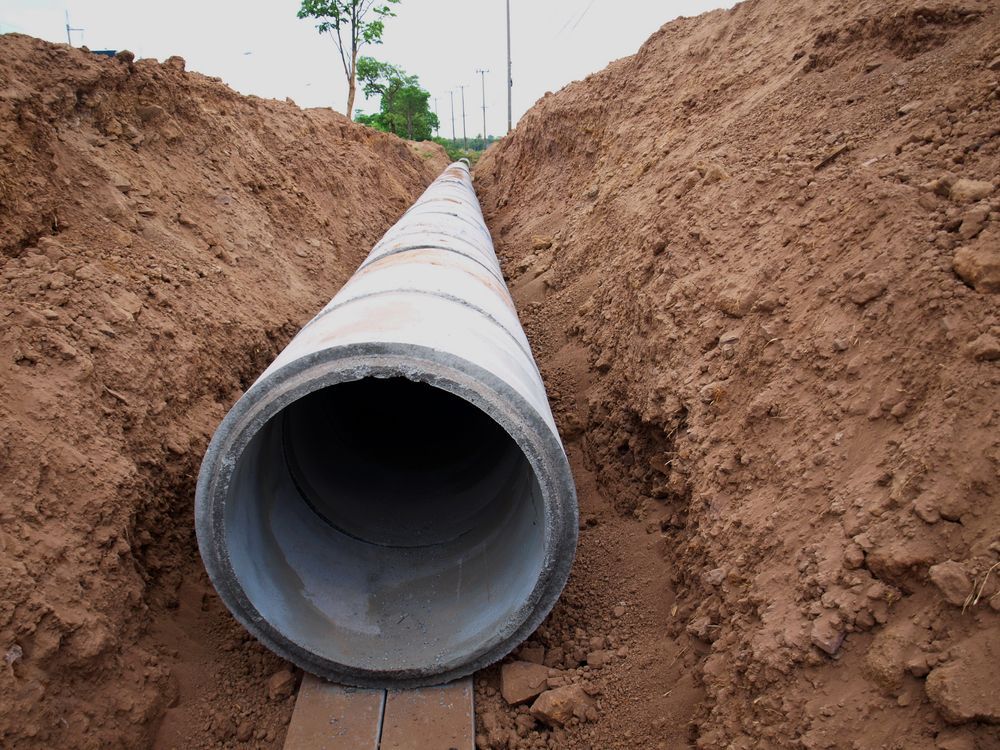
The installation sequence begins with reading the existing water movement: where it enters the property, where it concentrates, and where it needs to exit. The crew sizes the pipe or culvert to the flow volume rather than defaulting to a standard diameter, since undersized pipe is one of the most common reasons a previous drainage attempt failed. Trenches are cut to grade, the pipe is set, and the trench is backfilled with compacted material; where the job calls for it, gravel or stone surrounds are added around the pipe to keep sediment from migrating into the line. Confirm with the crew before work begins which elements are included in the quote and which, if any, are treated as additions.
Request a site review from MACK Land & Tree Management LLC to assess current water movement patterns and determine what drainage work the property needs.
The Difference Between Proper Drainage and a Temporary Fix
Drainage work that is installed at the wrong grade or with undersized pipe appears to function initially and then fails during heavier flow events—the pipe backs up, the trench saturates, and water begins taking its old path again. Sizing the pipe correctly requires calculating the contributing drainage area and the expected flow, not simply matching whatever was there before. When a culvert is being placed at a driveway crossing, the pipe diameter needs to account for the full upstream area that drains toward that low point, including any adjacent lots that shed water onto the property.
Once installed correctly, the change is visible: water that previously pooled in a low area moves through the pipe and exits at the outlet, the low point dries out between rain events, and the driveway surface or roadbed above the culvert no longer shows the rutting and undermining that standing water causes. Gravel surrounds added around the pipe protect the line from sediment intrusion, which extends how long the drainage system functions without maintenance or blockage.
Some drainage projects involve a single culvert at a driveway crossing; others require a networked system of ditches, pipes, and outlets across a larger area. The scope is determined by walking the property and tracing water movement from its entry point to the intended exit, which is why a site visit precedes any estimate. Work that only addresses the most visible low point without accounting for where the water originates upstream often requires a second project within a few years.
Common Questions About Drainage and Culvert Work
These questions address how drainage and culvert installation is planned and executed on residential and rural properties in Greenville.
How does the crew determine the right pipe size for a culvert installation?
Pipe diameter is based on the drainage area that flows toward that low point—a culvert that handles only the immediate crossing but is too small for the upstream contributing area will back up during any significant flow event.
What is the purpose of a gravel or stone surround around the pipe?
Gravel around the pipe allows water to enter and move through the system while filtering out fine sediment that would otherwise migrate into the pipe and reduce its capacity over time.
Why does trench grade matter for drainage pipe performance?
Pipe set at insufficient grade will not move water by gravity and will allow sediment to settle and accumulate inside the line; the trench must slope consistently from inlet to outlet to keep flow moving.
How do older ditch systems on Greenville-area rural lots affect new drainage work?
Established ditches that were dug without formal engineering often drain to points that conflict with current property improvements, so new pipe installations have to account for where the old system exits and whether that outlet is still functional and unobstructed.
What should be confirmed in the estimate before drainage work starts?
The quote should specify exactly which elements are included—pipe, gravel surround, inlet and outlet structures, and backfill—so that the finished cost is not affected by additions that were not discussed during the site visit.
MACK Land & Tree Management LLC also
installs drainage and culverts in Taylors, Greer, Simpsonville, Easley, and Spartanburg. To have your property's water movement assessed and a drainage plan developed, schedule a site walk with the MACK Land & Tree Management LLC team at a time that works for your project.